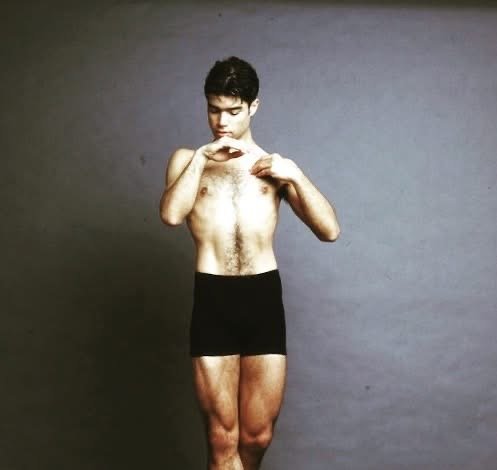
Choreography doesn’t behave like any other art form. It is radically unique in that its subject matter, the thing being used to make the work, are living people.
The entire notion of the individual artist coming up with the work on their own and then executing it through some inanimate medium, doesn’t apply here. Choreography isn’t something that happens inside one person’s head, it happens between and among people since like any complex living system, it’s a distributed type of cognition and subsequent knowledge.
It is impossible to work with living people as if they were colors, sounds, words, objects or even ideas. But more than that and for many reasons, it is impossible to separate choreography from the time in which it was made.
The role of the maker when it comes to choreography, doesn’t resemble remotely that of an artist in any other artistic field. If anything, it’s much closer to that of the coach of a sports team who also gets to invent the game.
In that sense, the entire notion of repertoire as it is being practiced in the dance world, is a negation of what choreography is.
Repertoire, when it comes to choreographic works - the practice of setting in stone something so it can be reproduced and transferred as is through time and space, regardless of the presence of the maker and by using some sort of score, was clearly copied from classical music, ignoring the fact that music is the most abstract of all art forms and therefore lends itself naturally to being transposed into a score, while choreography is the most concrete as it is tied to human action and therefore, refuses any attempt to be set as a finite entity - is probably the predominant symptom of the fatal misunderstanding regarding the art-form.
Choreographic repertoire is an attempt at the commodification of life itself. It is mostly about the preservation of control over material ressources and social status more than it is about art, but it is also the result of the age long human fear of change and death.
All choreographic works die eventually and they always die sometime before their maker does so. “Repertoire” is an attempt to ignore this death (for all the wrong reasons).
The ability to innovate and push the art-form forward, will continue to be compromised and stifled as long as most of the ressources, pedagogical approaches and works produced, keep being allocated to resuscitated and artificially keep alive dead works by dead artists.
When dead works are artificially kept alive, the result is the slow death of the art-form itself.
The notion that if we do not preserve these works, like we do with paintings and sculptures in museums, we will lose something valuable and as a result impoverish the present and future states of the art-form is ridiculous. Choreography is a living entity and so it behaves differently than object based art forms.
Choreographic knowledge and knowhow, the craft but also the artistic substance, travels naturally through time and generations just like humans have passed their DNA and cultures down for as long as humans have exited. Nothing is lost. That which is essential passes on, adapts and improves upon earlier versions in an endless evolutionary process. The same is true for choreography, since it is fundamentally and more than any other art-form, a living thing. Death is a change agent, it’s a necessary aspect in the evolution of everything that is alive.
Choreography is linked to life itself through the fact that it is made by and with living people and as a result, its two main properties are - Change and Death.